November 20, 2026
Deciding to part ways with unwanted body art is an increasingly common experience for adults across every walk of life. A design that felt meaningful during a specific chapter of your life might eventually clash with your personal evolution, career aspirations, or aesthetic preferences. According to SNS Insider, approximately 27% to 36% of people with tattoos experience regret and consider removal within five to eight years of getting inked. Fortunately, modern medical aesthetics has moved far beyond the painful, scarring, and unreliable extraction methods of the past. Today, clinical tattoo removal relies on sophisticated laser systems engineered to clear ink safely, predictably, and with minimal disruption to surrounding healthy skin. Understanding how these light-based platforms interact with pigment beneath the dermis empowers you to make informed decisions about your skin care journey.
Understanding How Skin Holds Tattoo Ink
To appreciate why specialized lasers are necessary to clear unwanted body art, it helps to first examine what happens inside the skin when a tattoo is applied. During the tattooing process, tiny needles puncture the outer layer of skin, known as the epidermis, and deposit insoluble pigment particles directly into the deeper, more stable layer called the dermis. Because the dermis does not shed its cells the way the epidermis does, the ink remains trapped in place long after the initial surface wound heals.
Your body naturally recognizes these foreign pigment particles as invaders and immediately dispatches white blood cells, specifically macrophages, to engulf and carry them away. However, individual tattoo ink granules are simply too massive for white blood cells to absorb and transport through the lymphatic system. Macrophages surround the pigment and hold it suspended in the dermal tissue, which is why a tattoo remains visible for decades. Effective tattoo removal requires a mechanism capable of breaking those oversized ink clusters into microscopic dust without burning or destroying the delicate collagen and skin cells around them.
Exploring the Science of Selective Photothermolysis
Modern clinical lasers achieve this precise ink fragmentation through a scientific principle known as selective photothermolysis. This process involves calibrating a concentrated beam of light to a specific wavelength that is absorbed almost exclusively by the target chromophore—in this case, the tattoo pigment—while passing harmlessly through surrounding water, hemoglobin, and natural skin tissue. When the laser energy strikes the ink particles inside the dermis, the pigment absorbs the light and converts it into rapid thermal and acoustic energy.
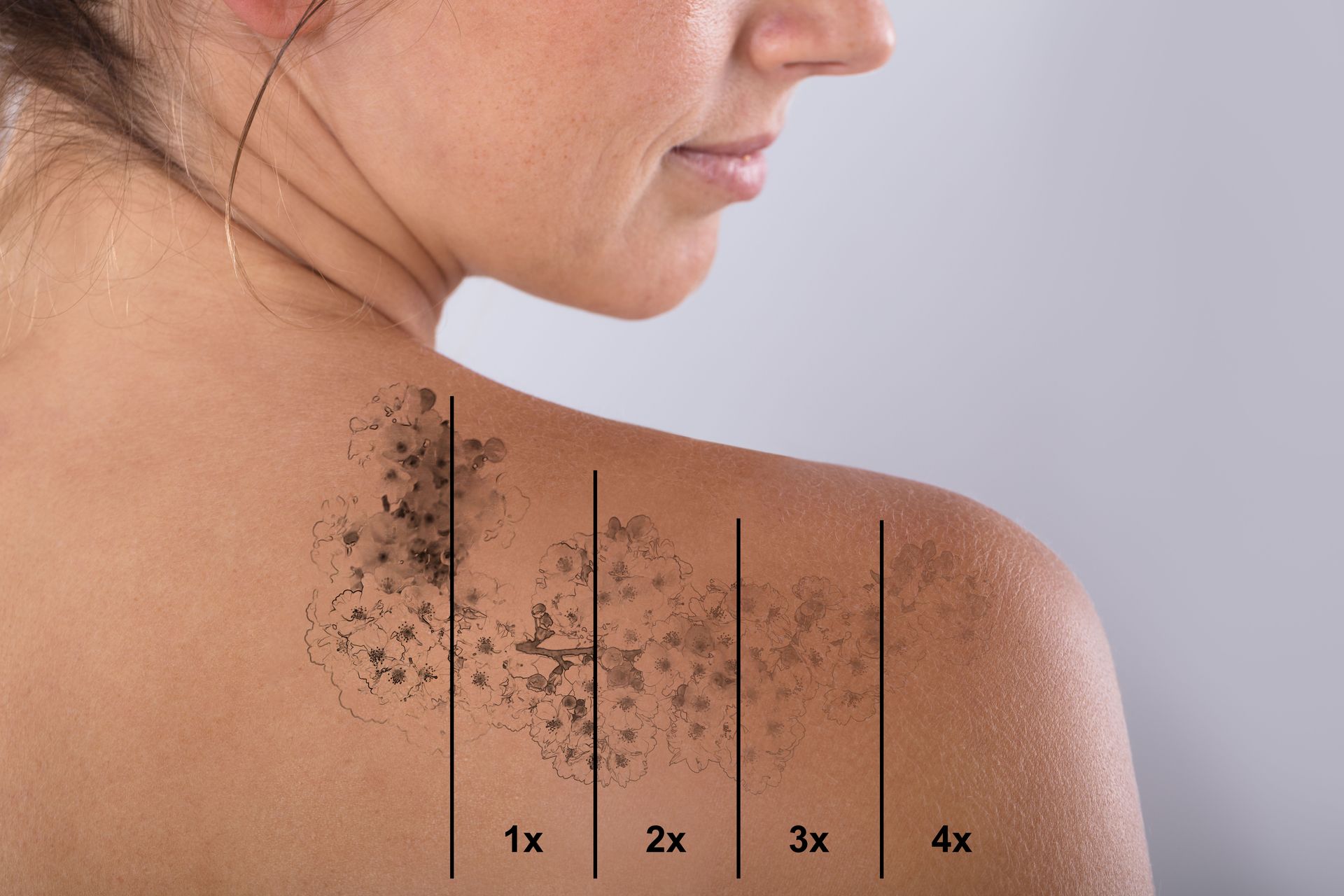
The speed at which this energy is delivered determines whether the ink shatters cleanly or overheats the surrounding skin. If a laser beam lingers on the skin for too long, heat radiates outward from the pigment, increasing the risk of blisters, thermal burns, textural scarring, and permanent changes in skin pigmentation. By delivering massive amounts of energy in ultra-short bursts, medical-grade lasers shatter the ink before heat has time to escape into neighboring tissue. Once the large pigment boulders are pulverized into tiny fragments, your immune system can finally step in, allowing macrophages to engulf the microscopic debris and flush it naturally through your lymphatic pathways over the following weeks.
Comparing Q-Switched and Picosecond Laser Systems
When researching clinical tattoo removal, you will most commonly encounter two primary categories of laser technology: Q-switched lasers and picosecond lasers. For decades, Q-switched lasers served as the gold standard in aesthetic dermatology. The term "Q-switched" refers to a specialized optical switch inside the laser cavity that builds up energy and releases it in extremely brief, high-intensity pulses measured in nanoseconds, or billionths of a second. A nanosecond pulse heats the ink particle so rapidly that it creates a photoacoustic shockwave, fracturing the pigment into smaller pieces while keeping collateral thermal damage relatively low. Q-switched platforms remain reliable, proven tools, particularly for breaking down dense black ink and classic dark designs.
Picosecond lasers represent the next evolutionary leap in light-based pigment clearance. Rather than firing in nanoseconds, picosecond systems deliver energy in trillionths of a second—roughly one hundred times faster than traditional Q-switched devices. Because the pulse duration is extraordinarily brief, picosecond technology relies predominantly on pure photoacoustic pressure rather than heat to pulverize ink. This intense mechanical shockwave shatters pigment into an ultra-fine dust rather than small pebbles. As a result, the body's lymphatic system can clear the fragmented ink more efficiently, often requiring fewer total treatment sessions to achieve noticeable fading and reducing the risk of heat-related side effects across a broader range of skin tones.
Matching Laser Wavelengths to Specific Ink Colors
No single beam of light can erase every color in a complex, multi-toned tattoo. Different ink pigments absorb light at different parts of the electromagnetic spectrum, which is why advanced tattoo removal platforms utilize multiple distinct wavelengths to target specific hues. Matching the right wavelength to each color ensures maximum pigment absorption and prevents wasted energy from irritating the skin.
The 1064-nanometer wavelength is the foundational workhorse for dark pigments. Because black, dark blue, and charcoal inks absorb virtually all light frequencies, the 1064-nanometer beam penetrates deeply into the dermis to shatter dark ink with high efficiency. Furthermore, because this longer wavelength has a lower absorption rate in natural melanin, it offers a strong safety profile for patients with deeper skin tones.
When treating bright, warm colors such as red, orange, yellow, and brown, practitioners frequently switch to the 532-nanometer wavelength. Created by passing the 1064-nanometer beam through a specialized crystal to double its frequency, this green light is strongly absorbed by red and warm-toned pigments. Because 532-nanometer light sits closer to the surface and interacts more readily with natural skin melanin, providers calibrate energy settings carefully to protect surrounding skin.
Stubborn cool tones—especially sky blue, turquoise, teal, and vibrant greens—often resist both 1064-nanometer and 532-nanometer beams. To clear these challenging hues, clinicians rely on specialized wavelengths such as 755-nanometer Alexandrite lasers or 694-nanometer Ruby lasers. These red-light wavelengths are absorbed selectively by green and blue ink particles, allowing providers to break down intricate watercolor designs and vibrant modern pigments that older single-wavelength machines could never fully erase.
Navigating the Treatment and Healing Timeline
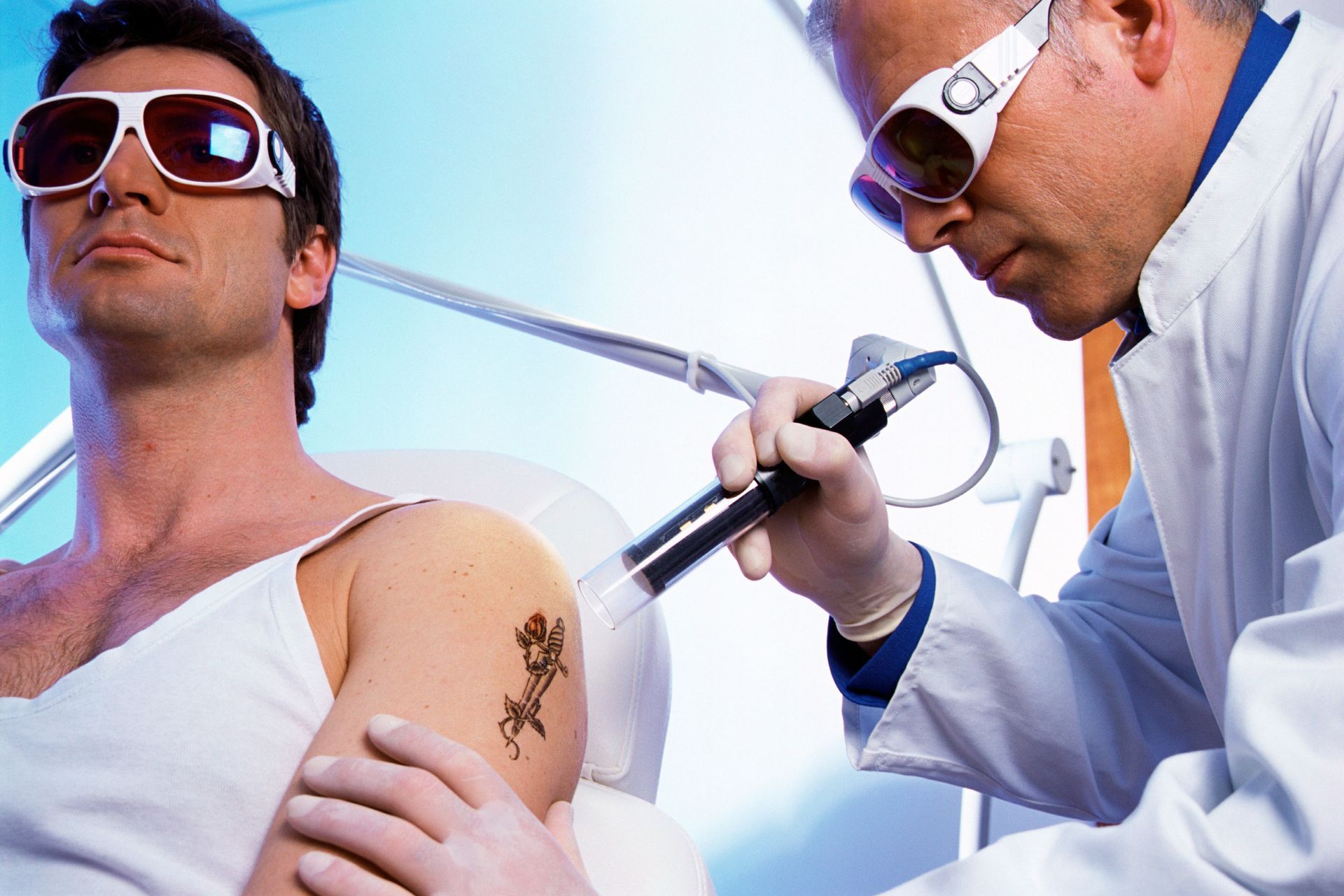
Successful tattoo removal is a gradual partnership between advanced laser engineering and your body's natural biological cleanup crew. During an appointment, a trained medical provider evaluates the tattoo's ink density, color palette, age, anatomical location, and your individual skin type before selecting the appropriate laser platform and wavelength settings. As the handpiece passes over the skin, rapid pulses of light snap against the pigment, often creating a temporary white, chalky appearance on the surface known as frosting. This frosting occurs when the rapid photoacoustic reaction releases microscopic gas bubbles beneath the epidermis, confirming that the laser energy has successfully reached the ink.
Immediately following a session, the treated area may feel warm, slightly swollen, or tender, similar to a mild sunburn. Over the next several days, the outer skin heals while macrophages work beneath the surface to clear the shattered ink dust. Because the lymphatic system needs adequate time to flush out the debris and the dermis needs time to recover, sessions are typically spaced six to eight weeks apart. Rushing treatments too close together does not speed up fading; instead, it increases the likelihood of skin irritation while interrupting the body's natural clearance cycle. Most professional tattoos require a series of six to ten sessions for optimal clearance, whereas older, amateur, or lightly shaded tattoos may fade significantly faster.
If you are ready to leave an unwanted tattoo behind and restore clear, healthy skin, professional guidance makes all the difference. At South Texas Family Medicine And Urgent Care, our experienced medical team combines advanced aesthetic technology with compassionate, personalized care at our convenient San Antonio locations in Castle Hills and Leon Valley. Call us today to schedule your private consultation.